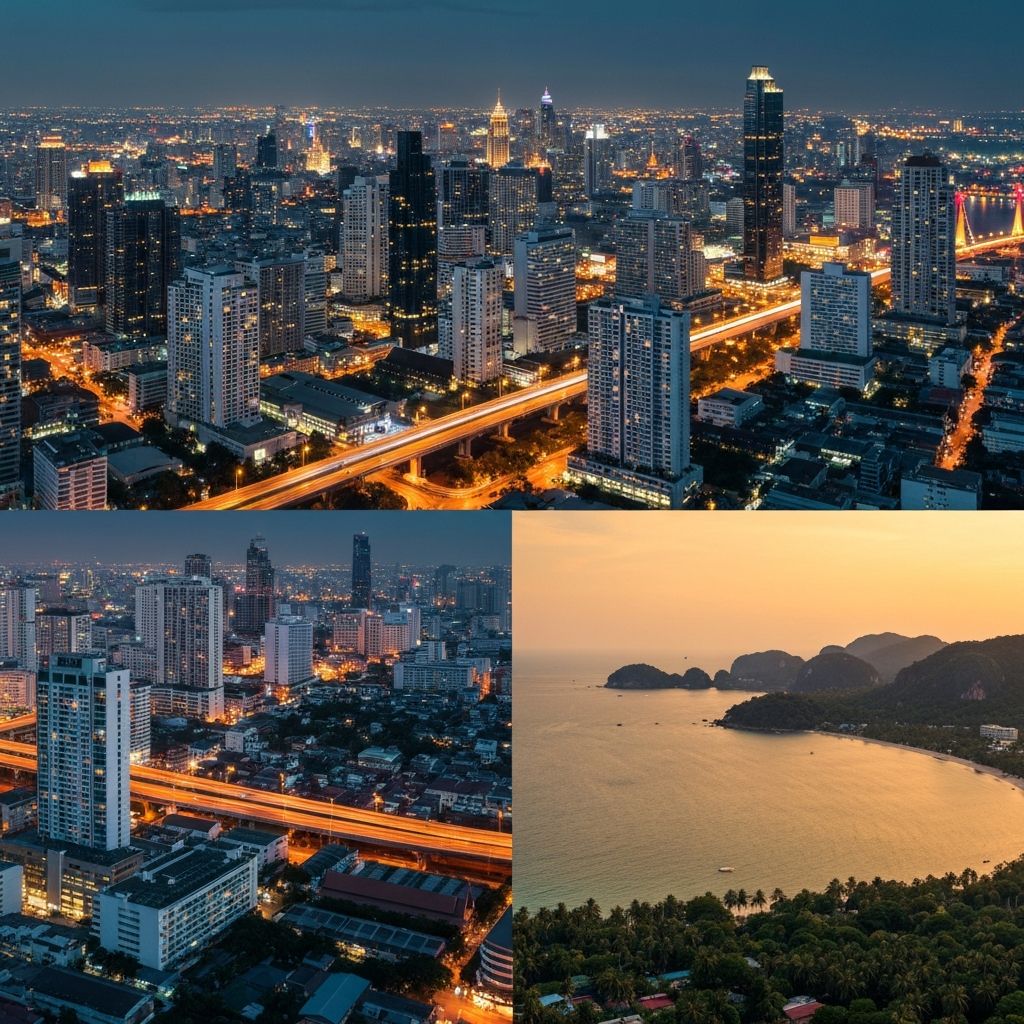
Thai Real Estate Market 2026: Strategic Outlook and Emerging Trends — Focus on Koh Samui, Phuket and Bangkok
For international investors scrutinising the Thai market in 2026, the landscape is characterised by a clear and durable segmentation. The past twelve months have confirmed a structural divergence: the domestic mass market remains constrained by internal economic pressures, while premium, tourism-driven and international segments are showing remarkable resilience.
In 2026, success no longer rests on a homogeneous national vision, but on the ability to identify pockets of growth that are decoupled from local uncertainties. This analysis reviews the major trends observed in 2025 and incorporates a particular focus on Koh Samui, which is emerging as one of the most attractive destinations for foreign investors seeking yield, lifestyle and capital appreciation.
Structural Divergence: Two Markets in One
Thailand's 2026 real estate market operates on two distinct rhythms.
Domestic Market
The residential segment targeting Thai nationals (units below 3M THB) remains under pressure. High household debt levels, tighter bank lending criteria and rising loan rejection rates have pushed developers to slow new launches and clear existing inventory. Even the upper-middle segment (above 10M THB) experienced three consecutive quarters of contraction in late 2025, signalling saturation of local demand.
International & Premium Market
By contrast, foreign capital and lifestyle demand continue to support luxury and tourism segments. Strong tourism recovery, sustained foreign direct investment in industry and high-end residential create an ecosystem that is almost independent of domestic constraints.
Bangkok: Flight to Quality and Rental Yield
In the capital, performance clearly separates prime central assets from peripheral developments.
- Luxury (Sukhumvit, Silom, Sathorn): price stability driven by scarcity of freehold land. The REIC new condominium index shows +3.4% annual growth at the start of 2025, driven almost entirely by the high-end segment.
- Structural rental trend: over 66% of Gen Z and Millennials prefer renting (LWS Wisdom & Solutions). Apartments well-served by BTS/MRT show occupancy rates close to 100% and net yields of 5–7% after charges.
Regional Hotspots 2026: Phuket, Koh Samui and the Eastern Economic Corridor
Infrastructure and tourism remain the most reliable long-term drivers of appreciation.
Phuket
A marked shift from speculative secondary residence to primary or semi-permanent residence. Foreign buyers are seeking villas for extended stays or retirement. Tourism rental yields of 6–9% gross depending on location and management.
Koh Samui
Koh Samui is asserting itself as the rising star of island luxury in 2026.
- Tourism recovery faster than expected (+25% international arrivals in 2025 vs 2024).
- Supply of hillside and sea-view pool villas still under-saturated compared to Phuket.
- Recent premium projects (e.g. Theva Horizon Samui Pool Villa) combine contemporary architecture, optional hotel management and secure foreign title structures (49% condominium quota or 30+30+30 leasehold).
- Average luxury villa prices with estimated annual appreciation of 8–12% at prime locations (Chaweng, Bophut, Maenam, Lamai, Lipa Noi).
- Competitive advantage: a calmer, more exclusive island than Phuket, while benefiting from a direct international airport and a HNWI clientele from Europe, Russia, China and the Middle East.
Eastern Economic Corridor (EEC)
Pattaya and Rayong are benefiting from massive investments (high-speed rail, port expansion). Land price increases in Bang Lamung up +126% in certain zones (REIC). Future demand for industrial and premium residential housing anticipated.
Legal Framework for Foreign Investors: Transparency Required
Two legal and safe routes:
Freehold Condominium
Full freehold condominium within the foreign quota (49% of the project's habitable floor area).
30+30+30 Leasehold
30-year emphyteutic lease renewable twice (30+30+30) on villas or land.
Important: Authorities are tightening controls against nominee arrangements. Any opaque structure carries risks of nullity. Prioritise projects with available foreign quota or clear leasehold registered at the Land Department.
Recommended Strategy for 2026
Prioritise:
- Completed or highly advanced off-plan luxury condominiums in Bangkok → immediate rental yield + capital preservation.
- Branded villas or managed projects in Phuket and above all Koh Samui → tourism yields of 6–10% + strong appreciation.
- Avoid the domestic mass market and peripheral zones without major infrastructure.
Conclusion
Thailand's 2026 market rewards selective investors who target international and premium segments. Koh Samui, with its exclusive positioning, accelerated tourism growth and still-reasonable supply of high-end villas, represents one of the most asymmetric opportunities available today.
Sources: REIC – Bangkok Condominium Price Index 2025 | LWS Wisdom & Solutions – Gen Z/Y Rental Preference | Bank of Thailand / ttb analytics – Household Debt Context | Savills Internal Transaction Data, Koh Samui & Phuket Villas 2024–2025
Positioning Your Capital in Thailand's Premium Segment
Speak with a THEVA advisor for a personalised investment strategy focused on Koh Samui's most asymmetric opportunities.
Your next investment starts here
Discover THEVA
The most protected luxury real estate investment in Thailand.
START THE VISIT →Take the guided tour — 5 minutes